Nama case study
Converting Out-of-Stock Frustration into Sales
Client: Nama — Premium cold-press juicer brand
Partner: ShiloRune (Design direction)
Timeline: Ongoing engagement
Platform: Shopify (heavily customized)
The Challenge
Nama's cold-press juicer had become a wellness phenomenon—but their Shopify store couldn't keep pace with demand or brand expectations.
Three critical problems were costing them sales:
-
Supply chain volatility — Frequent out-of-stock situations across multiple regions led to abandoned carts. Shopify's default "Sold Out" messaging gave shoppers no reason to wait.
-
Support bottleneck — The juicer's sophistication meant customers needed technical help, but there was no self-serve support infrastructure. Every question became a support ticket.
-
Template limitations — Stock Shopify themes couldn't deliver the premium, content-rich experience Nama's brand demanded.
Nama needed a partner who could engineer solutions to these problems—not just apply band-aids.
The Results
- Reduced cart abandonment during out-of-stock periods through predictive availability messaging
- Decreased support ticket volume with fuzzy-matching self-serve search
- Achieved sub-second page loads contributing to improved SEO rankings
- Delivered a fully custom storefront with under 5KB of JavaScript for cart operations
- Ongoing engagement as a satisfied long-term client
What We Built
| Component | Technology |
|---|---|
| Inventory forecasting system | Custom Shopify Application |
| Support ticket routing | ZenDesk API integration with malware scanning |
| Self-serve knowledge base | Custom fuzzy-matching search engine |
| Storefront | Mobile-first HTML5/CSS3 (no Bootstrap) |
| Cart & checkout | Custom lightweight JavaScript implementation |
| Content management | Structured content fields for magazine-style layouts |
Solution Deep Dive
Custom Logistics: Turning "Sold Out" into "Ships March 15"
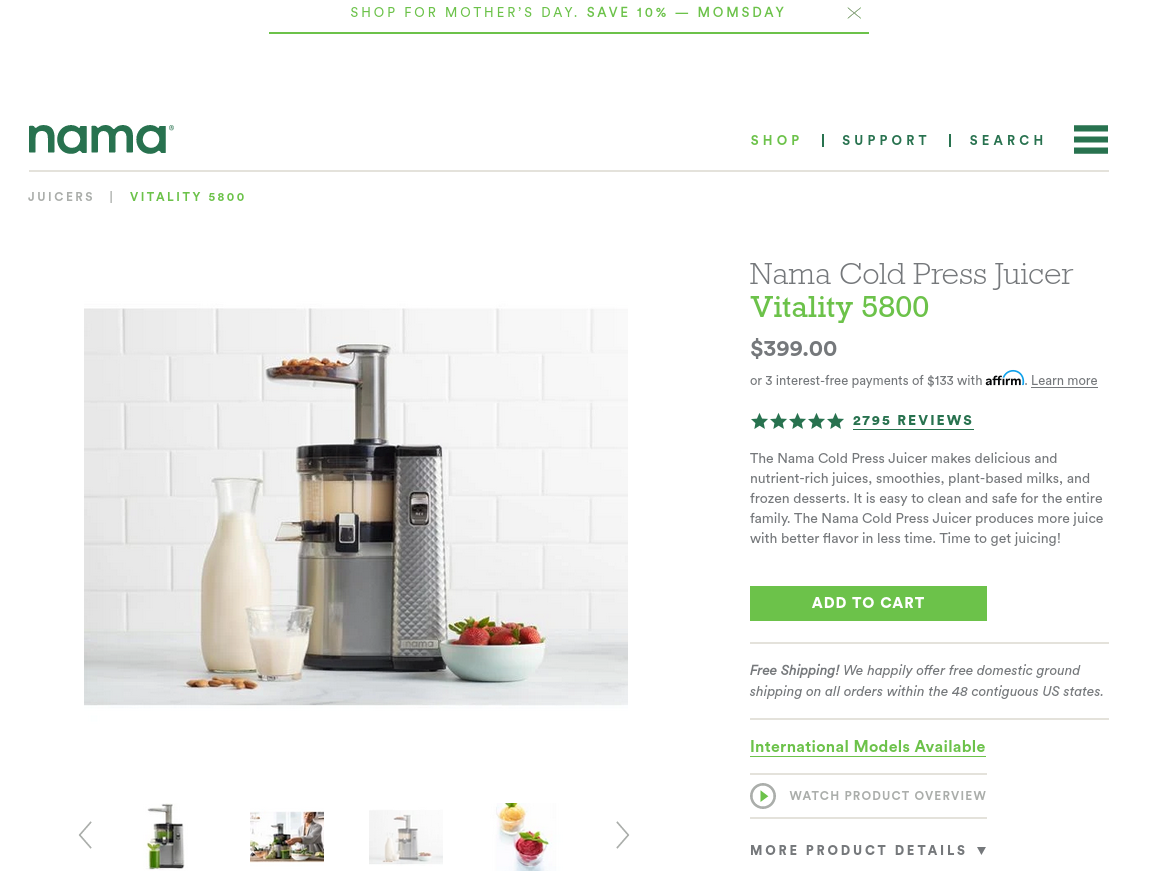
The default Shopify back-order experience is vague: customers see "Sold Out" or "Back in Stock Soon" with no commitment. For a $500+ appliance, that ambiguity kills conversions.
We built a custom Shopify Application that integrates with Nama's supply chain data:
- Shipment awareness — The system knows when containers are arriving from manufacturing
- Allocation tracking — As customers place back-orders, the system allocates units from future shipments
- Dynamic messaging — Instead of "Sold Out," customers see: "Ships when our March 15 shipment arrives"
- Accuracy protection — Allocation tracking prevents over-promising delivery dates
The result: customers who would have bounced now have a concrete reason to complete their purchase.
Customer Support Infrastructure: Self-Serve First
Nama's products require real support—but not every question needs a human. We implemented a layered approach:
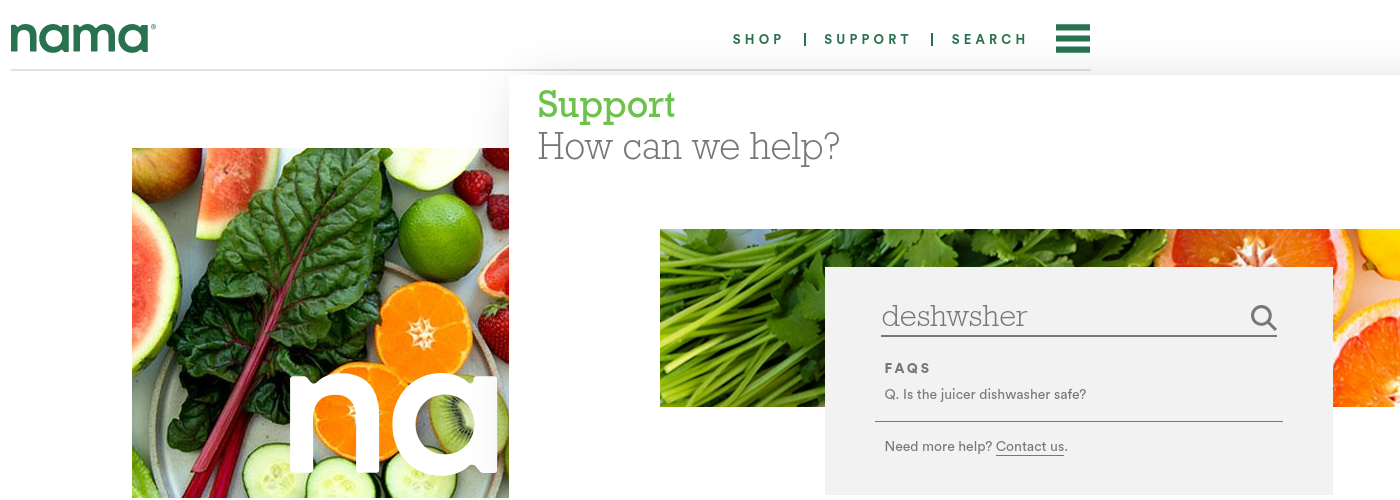
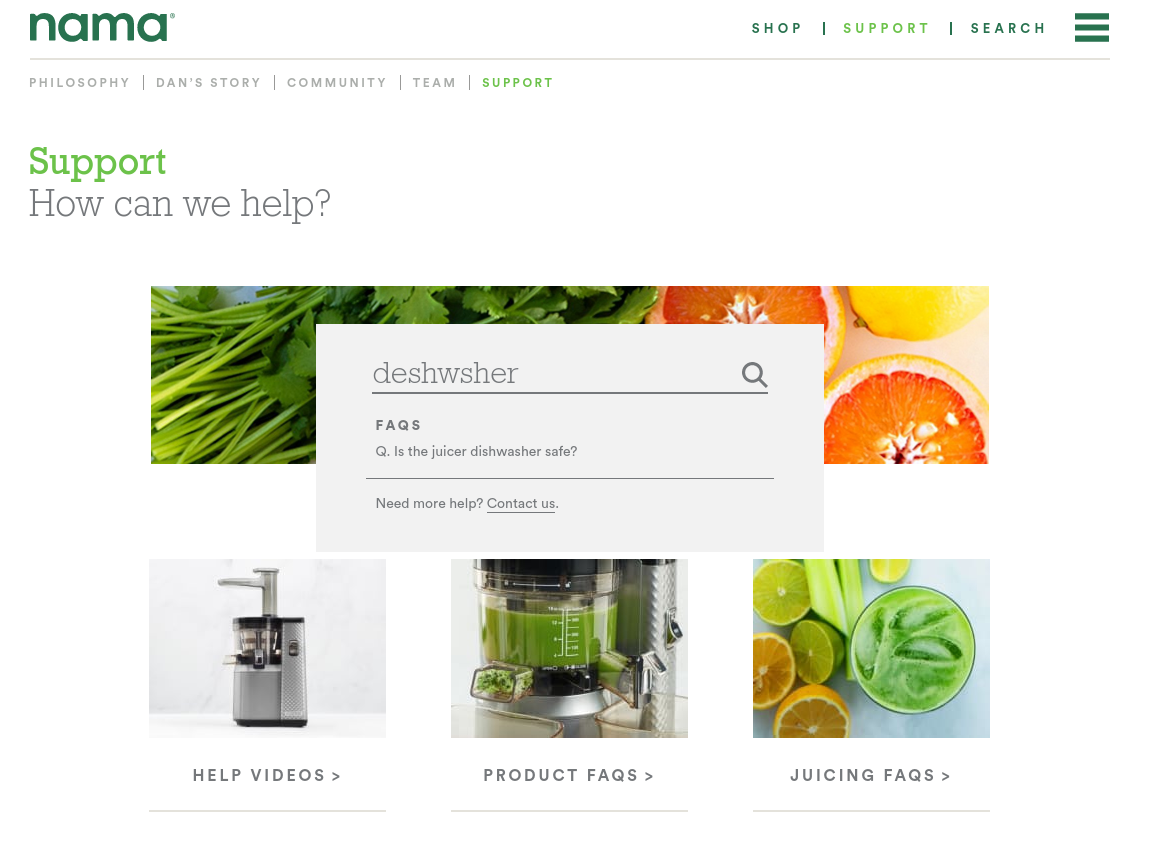
Fuzzy-matching search engine
- Configured to index only support-relevant content (not marketing pages)
- Tolerates misspellings and partial matches
- Intelligent content parsing prevents junk text from polluting results
Streamlined ZenDesk integration
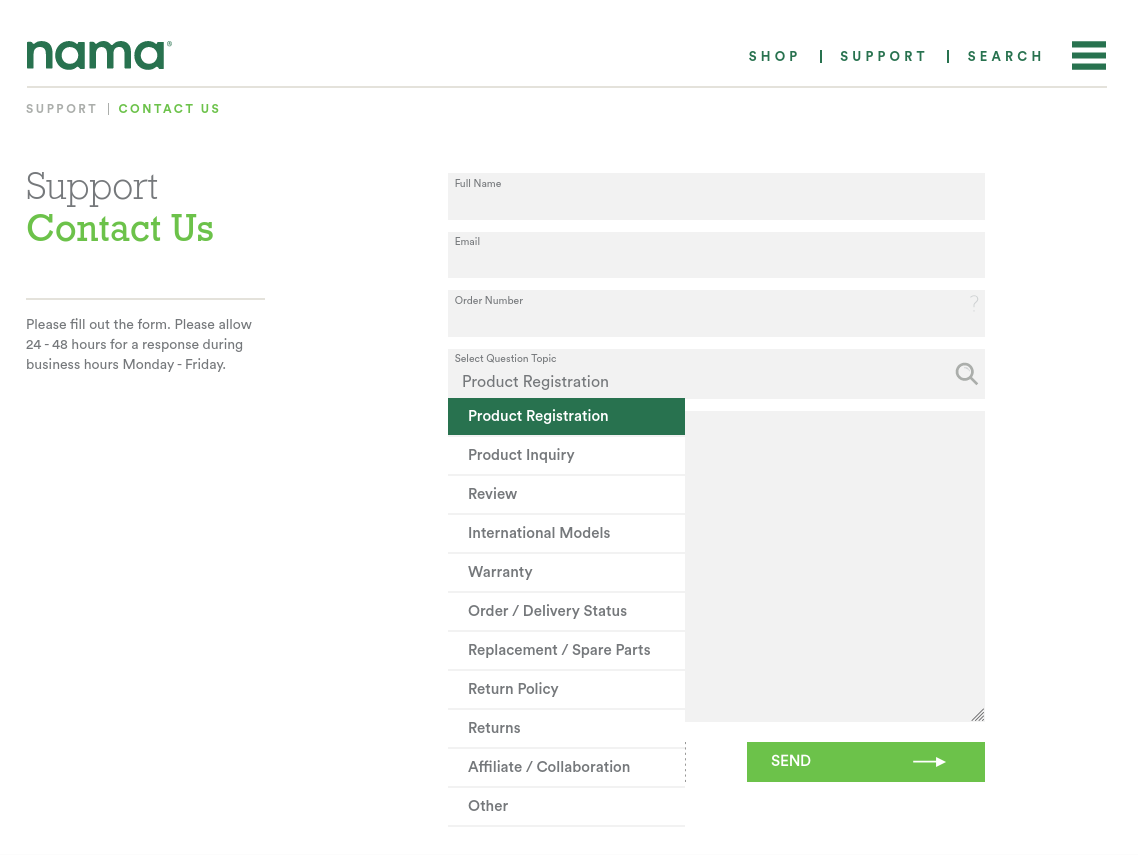
- Custom contact form routes tickets to the correct department automatically
- Customers can attach photos and video of issues directly
- All attachments are scanned for malware before reaching staff
- Clean, branded experience—not a generic widget
The goal: resolve 80% of questions without a ticket, and make the other 20% as efficient as possible.
Design & Front-End: Premium Without the Bloat
Stock Shopify themes carry years of legacy code. We started from scratch:
Performance-first architecture
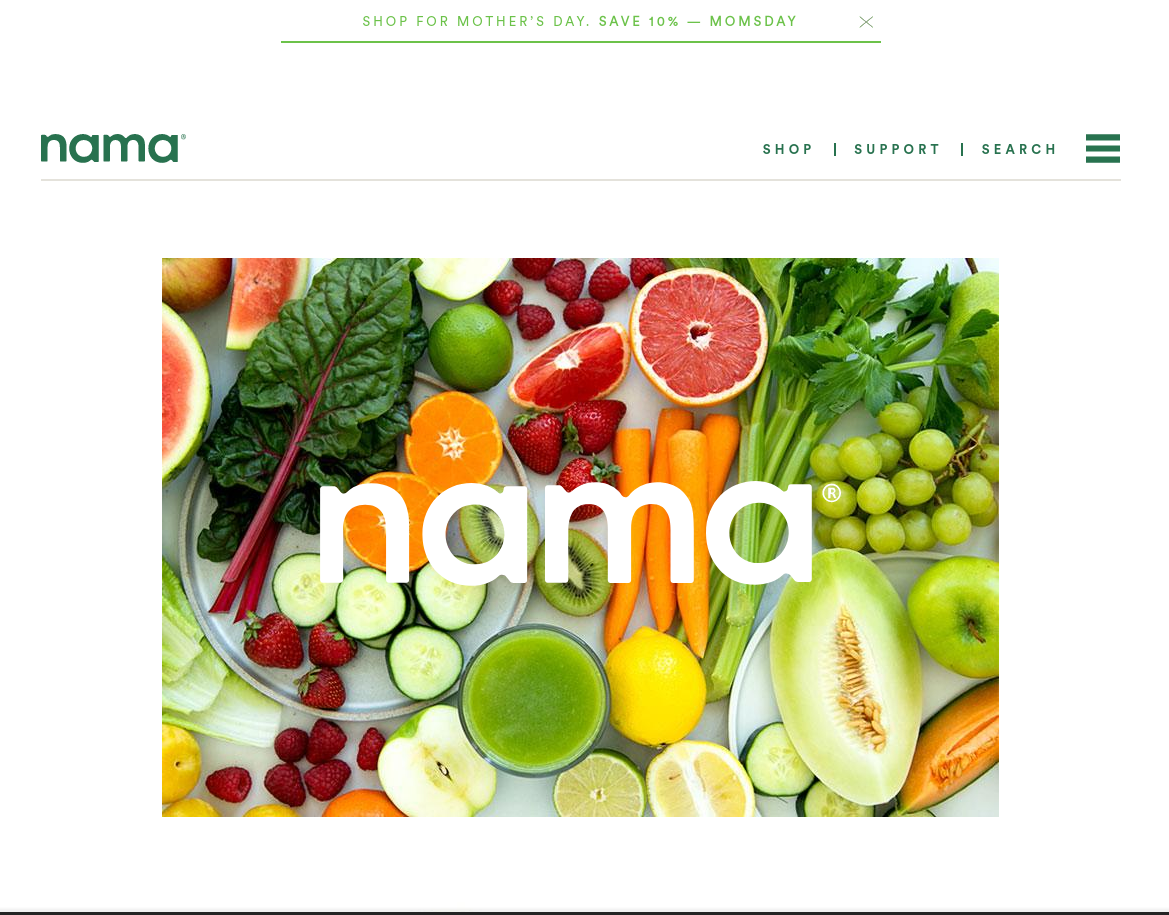
- Pure CSS3 layouts—no Bootstrap grid overhead
- CSS transitions for smooth animations (no JavaScript animation libraries)
- Resolution-independent assets for Retina displays
- Cart and product scripts under 5KB total
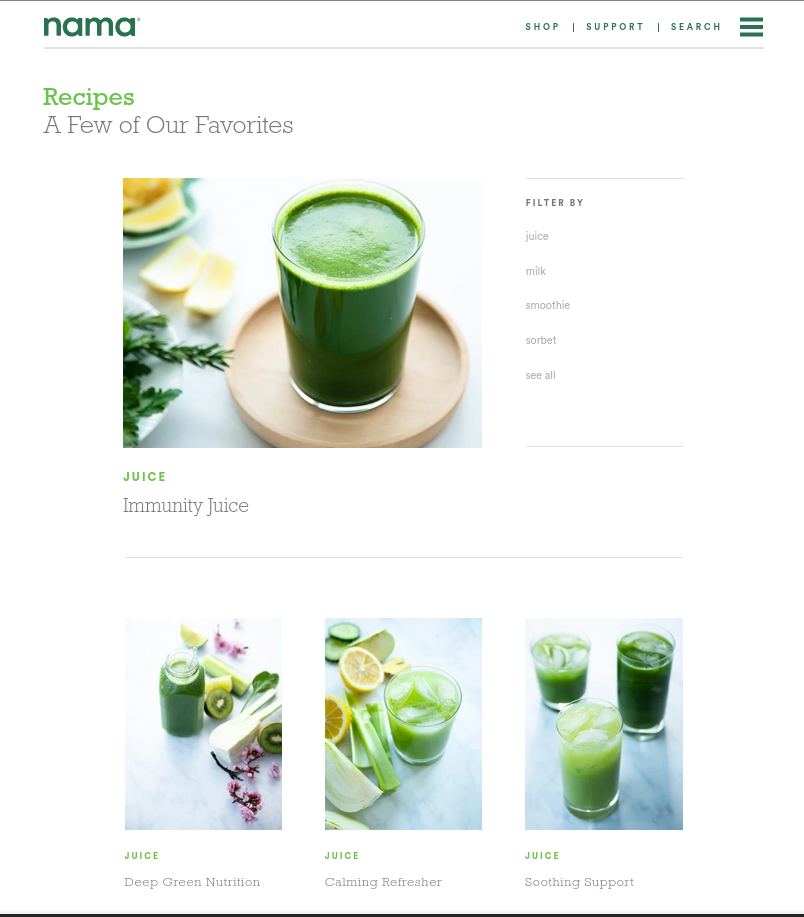
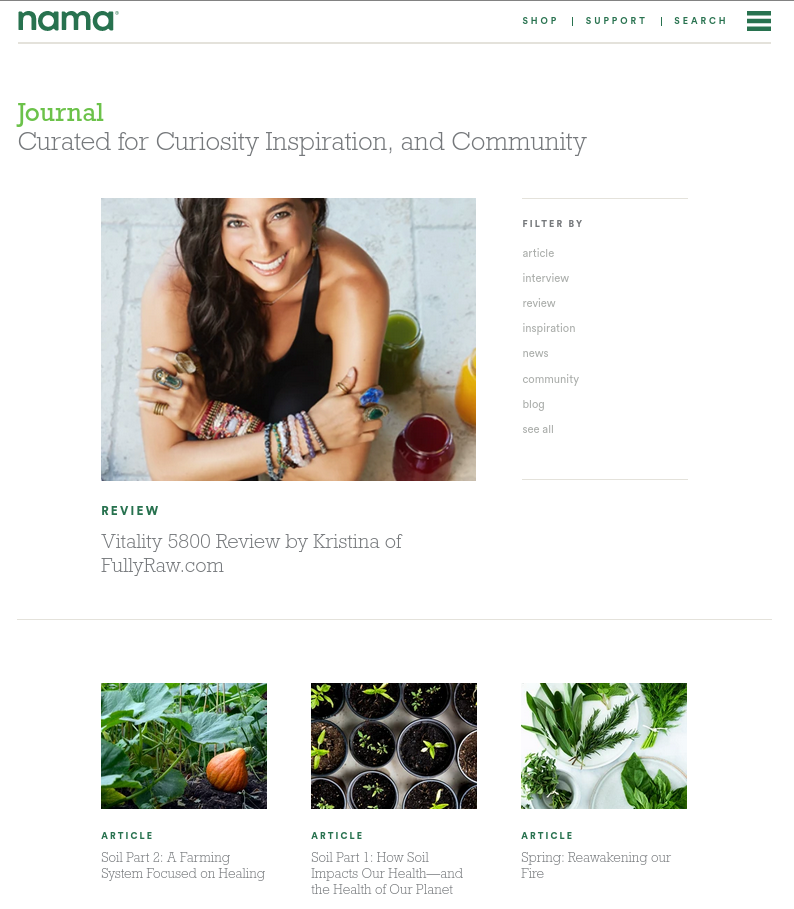
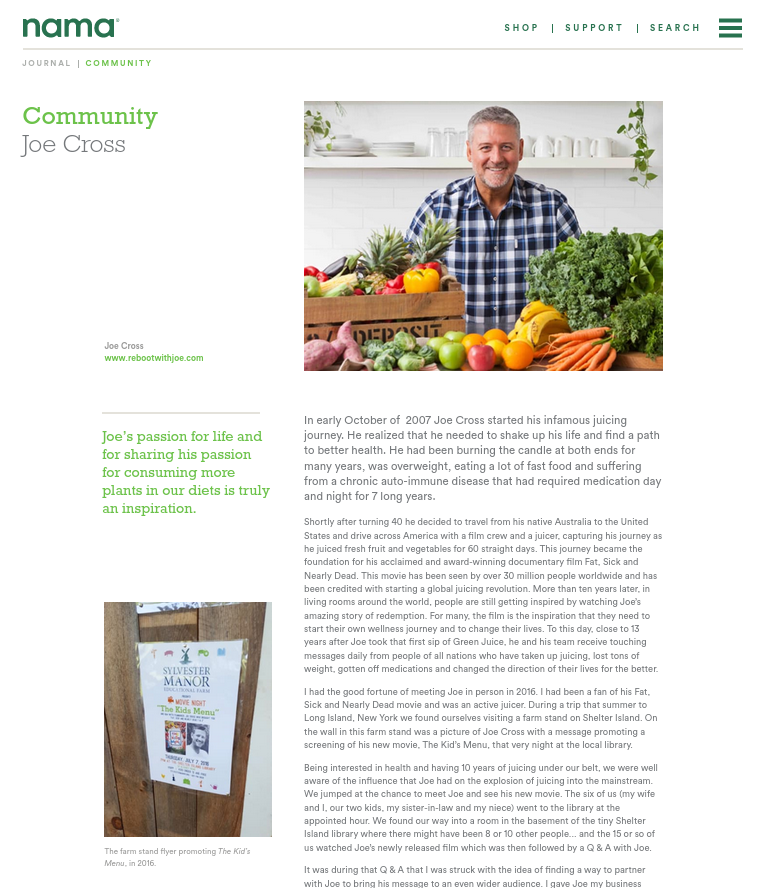
Magazine-style content system
- Custom content fields enable sidebars, inline image sets, and multi-column layouts
- Mobile-specific layout system (not just responsive breakpoints)
- Multiple content blogs: Recipes, Journal, Support—each with tag filtering and visual teasers
The payoff: Fast page loads improve SEO rankings, reduce bounce rates, and reinforce Nama's premium positioning.
Our Role
Rational Boxes led technical architecture, Shopify customization, and all backend development. ShiloRune provided design direction, and Nama's internal team managed ongoing content. This collaboration model let each party focus on their strengths while delivering a cohesive result.
Conclusions
This engagement demonstrates what's possible when you treat Shopify as a platform to build on—not a template to accept. By engineering custom solutions for logistics, support, and front-end performance, we transformed Nama's store from a liability into a competitive advantage.
The engagement continues today with ongoing SEO optimization and feature development.
Facing Similar Challenges?
Whether it's e-commerce limitations, support scaling, or supply chain complexity—we help engineering-minded companies build solutions that actually solve the problem.